



Raw Pappaya
Raw papaya is loaded with fibre and allows you to get rid of the toxins in the body. It can help you deal with acne, blemishes, and even pigmentation. Raw papaya juice can help you enhance your health. Eating grated raw papaya can be helpful for your digestive tract and even colon Origin from: Karnataka, Maharashtra & Andhra Pradesh
Red Pumpkin
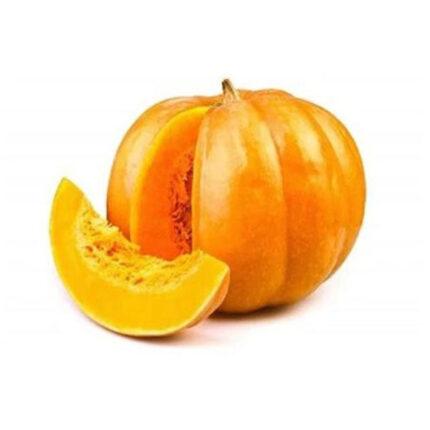
Red pumpkin or Lal bhopla is poor man's source of carotene in India. Red pumpkin is the member of the Cucurbitaceae family come in many different varieties. While each type varies in shape, colour, size and flavour, they all have hard protective skins that are difficult to pierce that give them a long storage life.Origin from: Karnataka

Small Indian Banana (Elachi)
Elaichi or Yelakki Bananas: The Small Sized Delights Contrary to what you may have thought, the name Elaichi or Yelakki has been given to these bananas because of their small size and not the flavour. They taste very much like regular bananas but are sweeter and not even as big as your palm. Origin from: Karnataka
Small Onion (Sambar Onion)
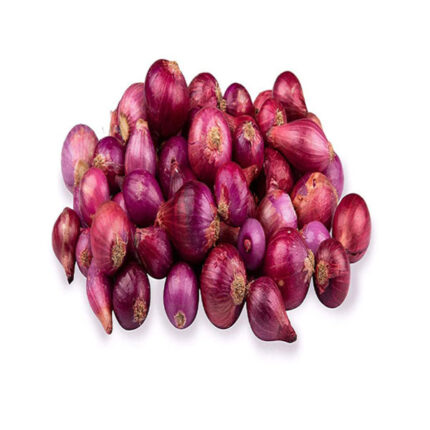
The name "shallot (also known as small onion)" comes from Ashkelon, an ancient Canaanite city, where people in classical Greek times believed shallots originated.The term shallot is usually applied to the French red shallot (Allium cepa var. aggregatum, or the A. cepa Aggregatum Group). It is also used for the Persian shallot or musir (A. stipitatum) from the Zagros Mountains in Iran and Iraq, and the French gray shallot (Allium oschaninii) which is also known as griselle or "true shallot"; it grows wild from Central to Southwest Asia. The name shallot is also used for a scallion in New South Wales, Australia and among English-speaking people in Quebec. Anglophone Quebecers and British English speakers stress the second syllable of shallot, as "shall-OH" and "shall-OT" respectively (Australians and New Zealanders also say "shall-OT"), while other varieties of English pronounce it as "SHALL-?t".
Snake Gourd Long (Padawal)
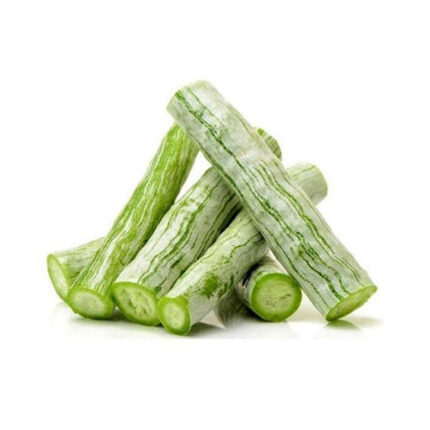
Trichosanthes cucumerina is a tropical or subtropical vine. Its variety T. cucumerina var. anguina raised for its strikingly long fruit. In Asia, it is eaten immature as a vegetable much like the summer squash and in Africa, the reddish pulp of mature snake gourd is used as an economical substitute for tomato.Scientific name: Trichosanthes cucumerina Higher classification: Trichosanthes Rank: Species Family: Cucurbitaceae Origin from: Bangalore

Supporta (Sapodilla)
Manilkara zapota, commonly known as sapodilla, sapota, chikoo, naseberry, or nispero is a long-lived, evergreen tree native to southern Mexico, Central America and the Caribbean. An example natural occurrence is in coastal Yucatán in the Petenes mangroves eco-region, where it is a subdominant plant species. Scientific name: Manilkara zapota Higher classification: Manilkara Rank: Species Origin from: Karnataka, Tamil Nadu & Maharashtra

Surti Papdi(valor papdi, Valor, Field Beans, Broad Beans, Sem ki Phali)
Lablab purpureus is a species of bean in the family Fabaceae. It is native to Africa and it is cultivated throughout the tropics for food. English language common names include hyacinth bean, lablab-bean bonavist bean/pea, dolichos bean, seim bean, lablab bean, Egyptian kidney bean, Indian bean, bataw and Australian pea. It is the only species in the monotypic genus Lablab Other common names include Tonga bean, papaya bean, poor man bean (Australia), Seim (Trinidad and Tobago, Guyana, and Suriname), and butter bean (Caribbean). Surti Papdi, Bai Bian Dou, Amarakka, Avara or Amara Payar , Avarai or Avaraikkaay, hitakubele avarekalu, pitakapappu hanupa/anapa, Hyacinth Bean, Njahe Origin from: Bangalore


